Chrysocephalum baxteri
A$9.00
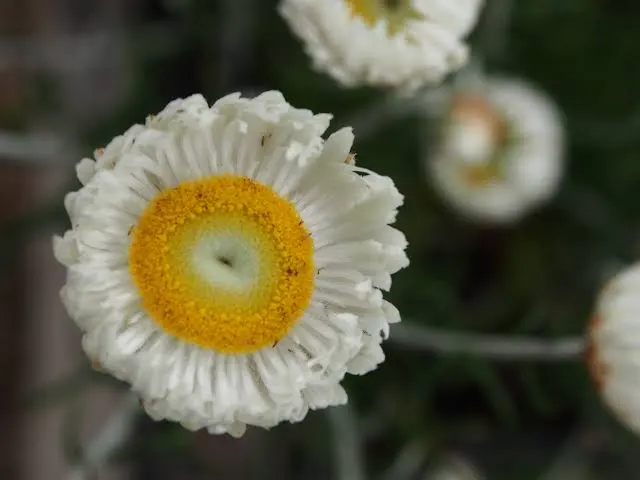
Chrysocephalum baxteri, commonly known as the Fringed Everlasting or White Everlasting, is a hardy Australian native perennial herb. It is prized for its mass of papery, white daisy-like flowers with bright golden-yellow centres that bloom from spring through early autumn.
Key Characteristics
Appearance: A low-growing, compact, mound-forming plant reaching approximately 30–40 cm in height and width.
Foliage: Features linear, silvery-green leaves with a woolly, white underside.
Native Habitat: Found across southern Australia, including Victoria, South Australia, New South Wales, and parts of Tasmania (where it is considered rare).
Gardening Uses: Ideal for rockeries, borders, mass plantings, and containers or hanging baskets.
Growing Conditions & Care
Position: Prefers full sun but can tolerate semi-shade.
Soil: Requires well-drained soil (sandy, loam, or clay-loam) and is generally drought tolerant once established.
Hardiness: Highly frost tolerant and can handle coastal conditions.
Maintenance: To prevent it from becoming "untidy," cut back hard after flowering to encourage fresh growth.
Chrysocephalum baxteri, commonly known as the Fringed Everlasting or White Everlasting, is a hardy Australian native perennial herb. It is prized for its mass of papery, white daisy-like flowers with bright golden-yellow centres that bloom from spring through early autumn. [1, 2, 3, 4]
Key Characteristics
Appearance: A low-growing, compact, mound-forming plant reaching approximately 30–40 cm in height and width.
Foliage: Features linear, silvery-green leaves with a woolly, white underside.
Native Habitat: Found across southern Australia, including Victoria, South Australia, New South Wales, and parts of Tasmania (where it is considered rare).
Gardening Uses: Ideal for rockeries, borders, mass plantings, and containers or hanging baskets. [1, 2, 3, 4, 5, 6, 7, 8]
Growing Conditions & Care
Position: Prefers full sun but can tolerate semi-shade.
Soil: Requires well-drained soil (sandy, loam, or clay-loam) and is generally drought tolerant once established.
Hardiness: Highly frost tolerant and can handle coastal conditions.
Maintenance: To prevent it from becoming "untidy," cut back hard after flowering to encourage fresh growth.
Propagation: Most reliably grown from softwood cuttings, though it also germinates readily from seed
Available in a 14 cm pot
